Buying vs. Renovating a House in San Francisco: How to Decide
Inventory is tight, bidding wars are common, and renovation costs have climbed enough that the choice between buying and renovating a house in San Francisco feels harder than it used to. A few years ago, the math was simpler. Today, it takes real work to compare a purchase you haven't made yet against a renovation on a home you already know.
This isn't only a financial question. It's a question about the kind of life you're trying to build, right now, in the home you'll actually live in. Below, we'll walk through what buying solves and what it doesn't, what renovating solves and what it doesn't, and a practical way to decide between the two.
Should I Buy or Renovate a House in San Francisco? What Buying Solves (and Doesn't)
Buying a new house gives you a fresh start: a different floor plan, no permitting process, and no months of living around construction. For families weighing whether to buy or renovate in San Francisco, that clean-slate appeal is a big part of the draw.
But the San Francisco market has its own reality to weigh against that appeal. Inventory stays tight across most desirable neighborhoods, and homes that do come up often draw multiple offers within days. Competitive bidding can push a purchase price well past what the home's condition might justify on its own.
There's also a detail that surprises a lot of buyers: much of San Francisco's housing stock is older, and older homes often need work no matter what the listing says. A "move-in ready" description doesn't always mean the layout works for how you actually live. A kitchen might be updated but poorly laid out. A primary suite might be finished but sit on the wrong side of the house. Buying doesn't automatically remove the need for an interior designer's perspective. It just changes when that work happens and who's already made the decisions before you.
Is It Worth Buying a House to Renovate in San Francisco? What Renovating Solves (and Doesn't)
For homeowners already leaning toward renovating a house in San Francisco, that path solves a different set of problems. You keep the equity you've already built, you stay in a neighborhood and school district your family knows, and you keep the character that drew you to an older home in the first place: the moldings, the light, the bones that a new build often can't replicate.
A renovation typically runs $300,000 to over $1.5 million depending on scope. Permitting timelines for a San Francisco renovation can run long, and older homes, especially Victorians and Edwardians, tend to hide surprises once a wall opens. Living through construction is disruptive, even when it's well managed.
Homeowners regularly underestimate their own house's potential — they judge it against how it looks today, not what it could become with the right interior design changes. That gap is exactly what an interior designer can help you assess.
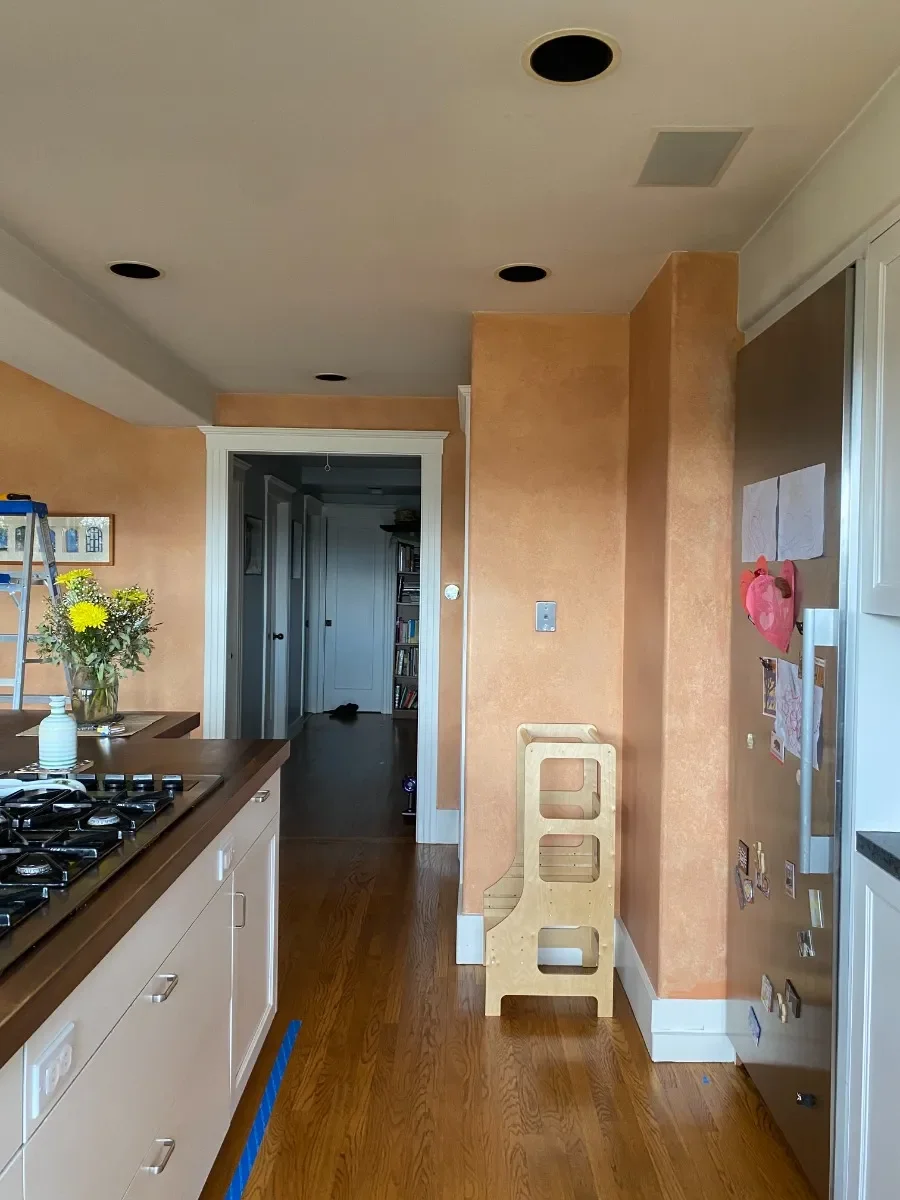
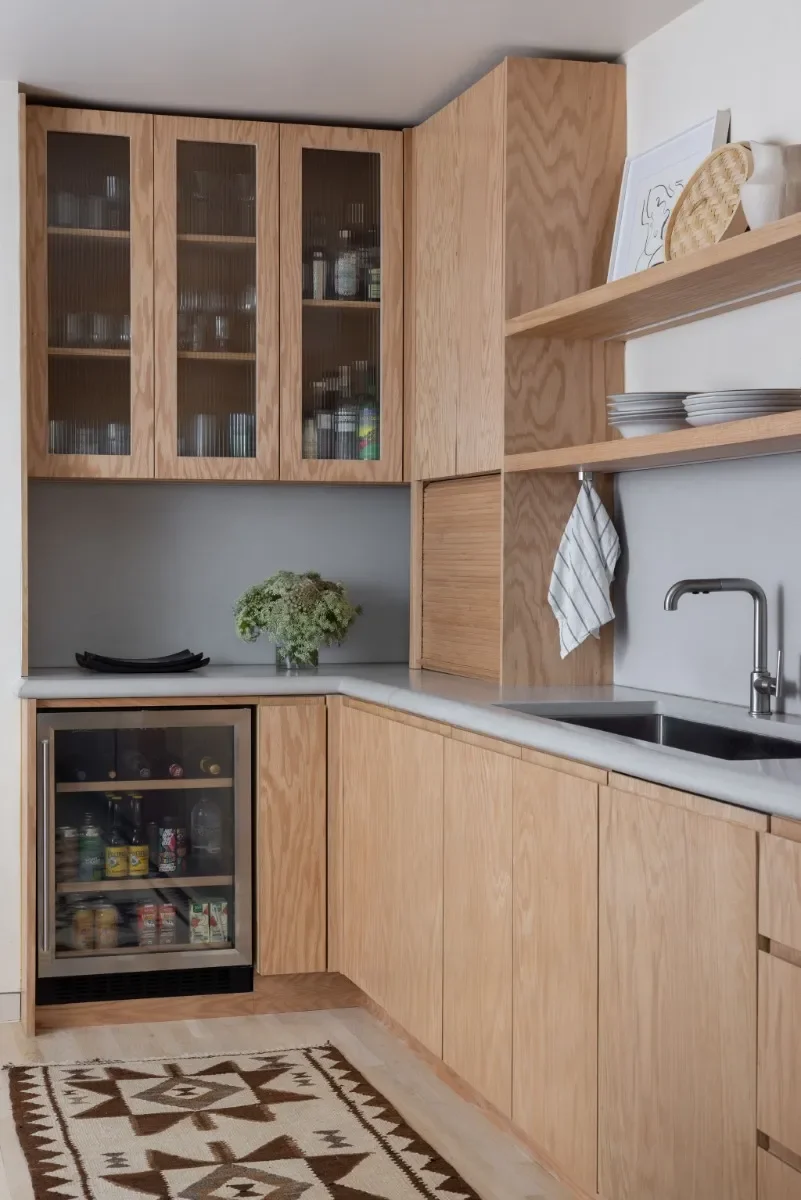
Before and after in the same San Francisco kitchen: what was there gave way to custom red oak cabinetry, reeded glass-front storage, and a built-in beverage fridge, proof that renovation potential is rarely obvious from how a space looks on day one.
Is It Better to Remodel or Buy a New Home in San Francisco? How to Actually Decide
Rather than treating the choice to buy a new home or remodel a house in San Francisco as an abstract either-or, it helps to run the numbers on your specific situation. Start with cost per square foot in your actual neighborhood, for both a comparable purchase and a comparable renovation. The two numbers are rarely close to what general guides suggest, because the market varies by neighborhood. An interior designer can help you get realistic numbers for the renovation side before you compare.
Next, get specific about your scope of work. Buying a new home doesn’t always mean move in ready; most homes still require some renovation to fit how you live. A home renovation in San Francisco rarely stays small either, once a contractor opens the walls, which can expose more than what you expected. Compare the two paths: what would it actually take, in dollars, time, and financing, to get either option to the home you actually want?
Then weigh your non-negotiables. Natural light, usable outdoor space, commute distance, school assignment: these matter more to daily life than square footage alone, and they often tip the decision in a direction the spreadsheet didn't predict.
The step people skip most often is a feasibility conversation with an interior designer before deciding. Sitting down with a design professional who can look at your current home, or a home you're considering, and tell you what's actually possible tends to reveal options homeowners didn't know they had. If you're weighing whether to stay and renovate or buy something new, you can book a consultation with Studio VAE to walk through your options before you commit either way. For a sense of that process, What to Know Before Starting a Home Renovation is a useful starting point, and What Interior Designers Actually Do walks through a designer's involvement in your renovation project. Here's what that assessment looked like on one San Francisco kitchen.
In Practice: What Renovation Potential Actually Looks Like
On paper, the kitchen pictured above worked: the cabinets closed; the appliances ran. But it wasn't laid out for how this family actually wanted to live in it: indoor-outdoor flow, an unobstructed view of the downtown skyline, storage that did more than just exist, and a dining area that finally felt intentional instead of squeezed into whatever space was left over.
Getting there meant a full gut renovation, reworking the layout itself, not just what filled it. What emerged was custom red oak cabinetry built to the room's proportions and closed storage designed so every item had a home. Every decision traced back to how this family wanted this specific room to work, not a generic renovation checklist.
That's the assessment that changes the buy-or-renovate math before a dollar is spent on either path: the difference between what a house is and what it could become.
Buying vs. Renovating: Key Takeaways
There's no universally right answer between buying and renovating a house in San Francisco. There's only the right answer for your home, your finances, and the life you're trying to build right now.
A "move-in ready" listing rarely means design-ready. Most homes, whether newly purchased or already yours, need an interior designer's perspective to actually function for how your family lives.
Renovation potential is almost always underestimated without expert eyes on the property. A feasibility conversation can change the whole calculation before you spend a dollar on either path.
The earlier an interior designer joins the conversation, the more options stay open. Waiting until after closing, or after demolition starts, usually means working around decisions someone else already made. If you're weighing how long that process would take once you commit, How Long Does an Interior Design Project in San Francisco Really Take? walks through realistic timelines phase by phase. And if furnishing a newly purchased or newly renovated home is part of your budget picture, The Thoughtful Home workbook helps you plan that cost room by room.
Frequently Asked Questions
Q: Is it cheaper to renovate or buy in San Francisco right now?
A: Whether it's cheaper to buy or renovate a house in San Francisco depends on the neighborhood and the scope either path requires, not on a single citywide number. Run cost per square foot for a comparable purchase against cost per square foot for a comparable renovation in your specific area, then add the full scope of work each option actually needs. A home that looks cheaper to buy often needs just as much invested afterward to function the way you want.
Q: Should I renovate or move?
A: Renovating vs. moving comes down to one question: is your current home the problem, or just how it's laid out? If the bones are good and it's not the actual issue, renovating is worth serious consideration before you start touring listings. Selling means giving up the equity you've already built and taking on a new mortgage at whatever rate the market offers that day — a cost that's easy to underweight against the appeal of a fresh start. Redirecting that same budget into a renovation keeps the equity and the neighborhood while still solving the layout or space problem that made you consider moving in the first place. Moving still makes the most sense when the house itself, the neighborhood, or the commute is the real issue, since no renovation budget can fix a location.
Q: How do I know if my current home has renovation potential?
A: Most homeowners underestimate this without outside input, because it's hard to see past how a space looks today. An interior designer can walk your home and identify what the layout, structure, and light actually allow, often revealing options like reconfigured floor plans or added square footage that aren't obvious from the inside.
Q: Does Studio VAE help with feasibility assessments before a full commitment?
A: Yes. Our Interior Design Consulting sessions are built for exactly this kind of decision, including reviewing a home you're considering buying before you make an offer. We can look at floor plans, walkthrough video, or listing photos and talk through how the house would actually work for your life, and where its layout has room to change.

Meet Your Interior Designers
Studio VAE is a full-service interior design studio serving the San Francisco Bay Area, led by Principal Interior Designers Veronica Jurist and Aggie Revane.
With decades of experience in high-end hospitality, residential design and interior architecture, Veronica and Aggie create spaces rooted in sustainability, wellness and meaningful connection.