What Interior Designers Actually Do: Behind the Scenes at a San Francisco Design Studio
A look at the work behind full-service design projects — what gets noticed, and what carries it.
Most of what interior designers actually do never makes it into the finished photograph. The reveal moments and styled vignettes are real, but they're the surface of a much longer process — months of decisions, drawings, and quiet problem-solving that happen well before anyone sees the room.
If you've started asking what a full-service interior designer in San Francisco actually does, you're asking the right question at the right time. The gap between expectation and reality is where most of the misunderstanding about our profession lives. This is our attempt to close it.

Walking the framing on a Bay Area project to coordinate electrical placement for window treatments — one of the decisions that becomes permanent the moment a wall is closed.
What an Interior Designer Actually Does Behind the Scenes
When clients describe what they think an interior designer does, the answer usually involves furniture, color, and finish selections. That's part of it — but it's a fraction of the actual work.
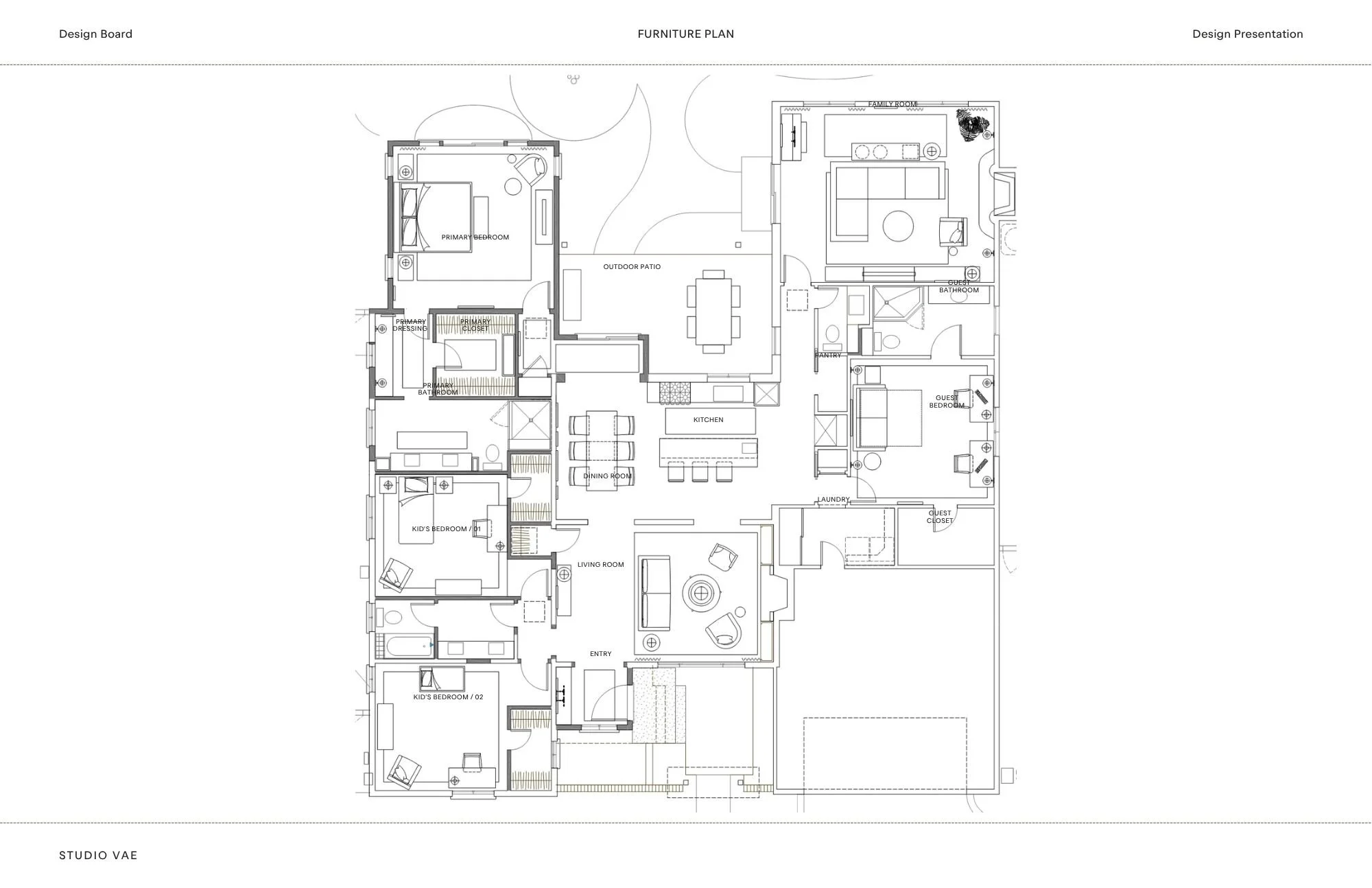
Before a single piece of furniture is ordered, we've measured the space — typically with LiDAR scans that document every door, window, stair, fixture, and appliance with precision. From there, we draft floor plans, study how you move through your home and how rooms relate to one another, assess natural light at multiple times of day, flag conditions that may need an architect or engineer's input, and develop a budget grounded in what it will actually cost to execute the project — not an aspirational number that falls apart in procurement.
In San Francisco especially, where existing homes rarely match their original drawings, we often start from a freshly documented set of measurements rather than what's on file. Our phase-by-phase guide walks through how this sequence unfolds month by month. This is the invisible infrastructure of an interior design project. Clients experience the outcome. They rarely see the scaffolding underneath it.
There's also the matter of decision fatigue, which is real and underrated. Our clients are extraordinarily good at making decisions in their professional lives, but put anyone in front of an open-ended set of paint swatches and something breaks down. Good design is partly an editing process — and editing is the work. We hand you a curated set of options, already filtered through your brief, your space, and years of professional judgment.
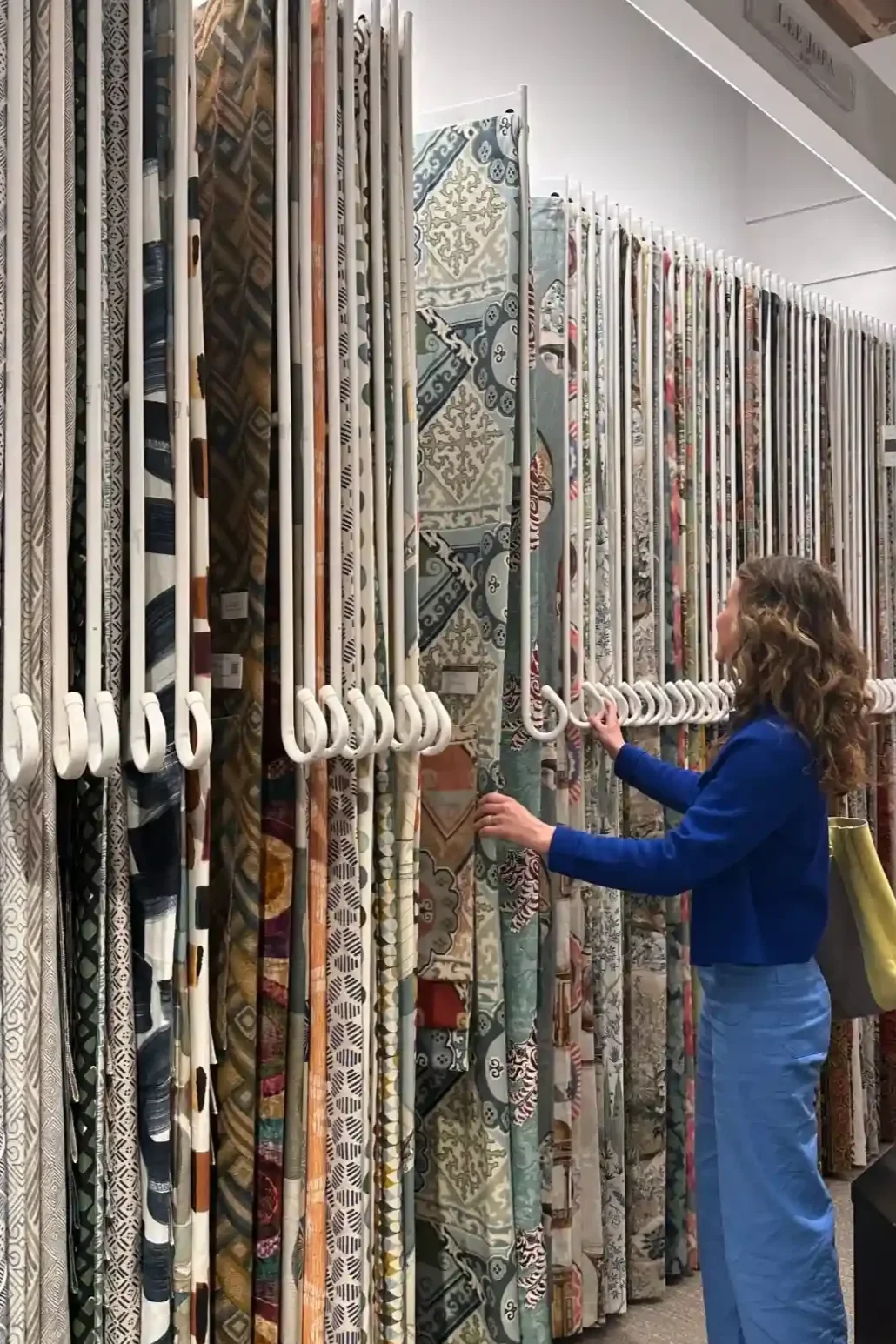
Sourcing fabric at Kravet — one of the trade-only showrooms at the San Francisco Design Center that designers can access on behalf of clients.
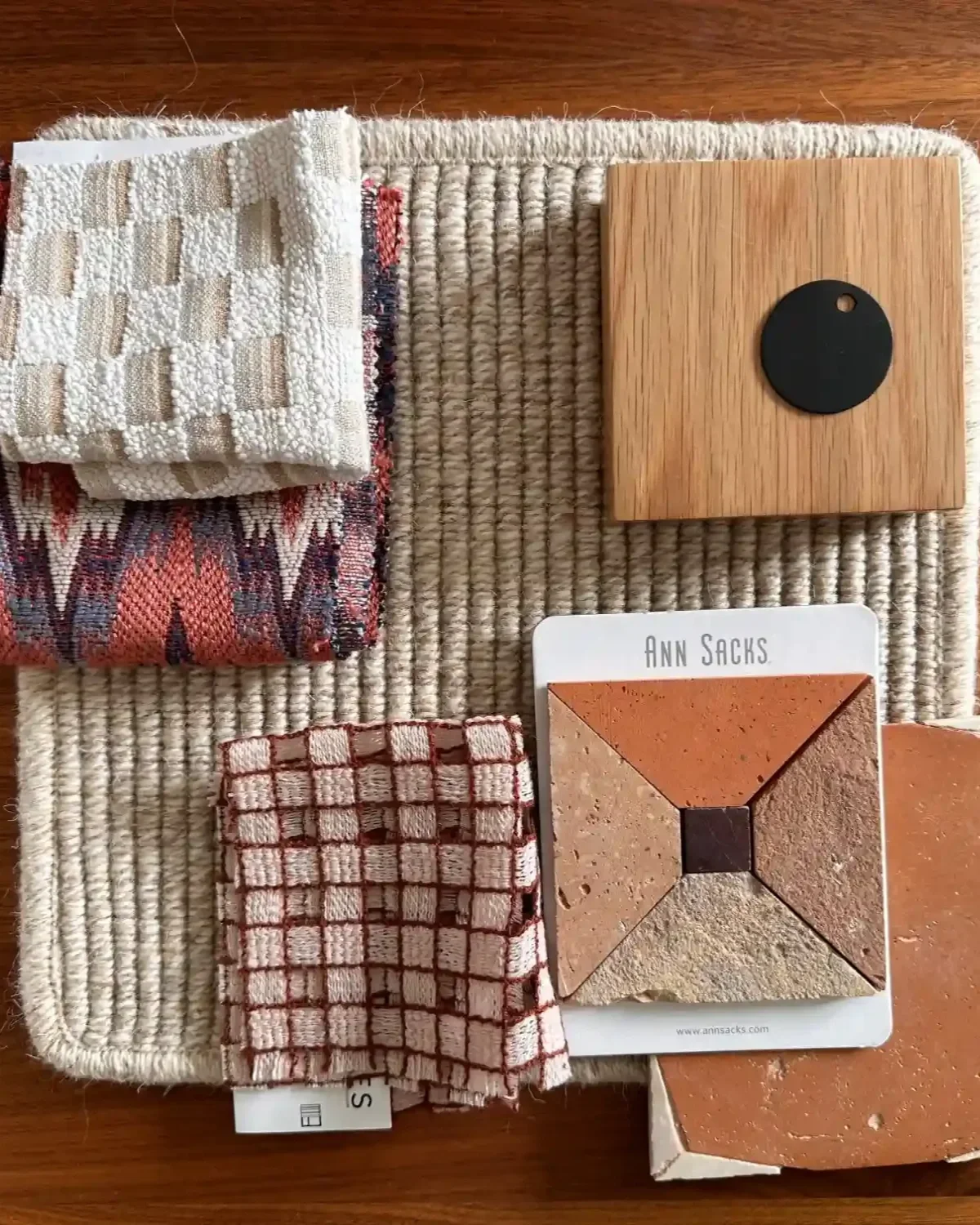
A material palette pulled together for one Studio VAE project — the result of dozens of decisions made before anything reaches the client.
Trade Access: Why Our Vendors Matter as Much as Our Designs
One of the most tangible things we bring to a project is trade access — the ability to source from vendors, workrooms, and showrooms that don't sell to the public. People sometimes assume the value here is a discount; it isn't. The actual benefit is the goods themselves — a tier of materials, finishes, and craftsmanship that retail can't reach — supplied by partners whose standards match how we work.
These are relationships built deliberately over years. Vendors and workrooms whose work we believe in, who stand behind their products, and who flag issues before we have to.
Beyond the relationships, there's the matter of specification — knowing which fabric, finish, or material is actually right for the way you live and the way your home is lit. A linen that performs beautifully in one home isn't the right call for a family with two young kids and a dog. A finish that reads warm in a south-facing room can fall flat in an Outer Sunset home that gets direct light for three hours a day. We design homes to be lived in — matching the material to the life that's going to unfold in the space, not just to the mood of a presentation board.
And that's only the question of which material. A single countertop carries its own stack of decisions — the slab itself (no two are alike), the edge profile, the thickness, the precise dimensions, how it meets the cabinetry on either side, the finish (honed, polished, leathered), and how all of that reads against the floor, the casework, and the light in the room. Each is a discrete call. Then multiply by every surface in the home.
When an Interior Design Project Doesn't Go to Plan
Every project of any real scope has a moment where something doesn't go the way it was supposed to. A fabric we specified gets discontinued. A custom piece arrives and the finish reads differently than the sample. A wall opens up during construction and reveals plumbing that wasn't on any drawing.
None of this is unusual. What matters is what happens next.
We're in this right now on a current project. Window treatment fabric we'd specified came back from the workroom with the dyelot off — the color was a shade away from the sample we'd approved months earlier. The workroom flagged it themselves before fabrication began, rejected the lot, and we're waiting on a new run that matches the approved selection. From the outside, this reads as a delay. From inside the project, it's the system working: a vendor who knows what the design called for, caught the issue before it became a problem, and held the line on what we approved together.
The construction post on the journal goes deeper into what an interior designer does once construction begins. The broader principle: when something doesn't go to plan, our job is to recommend a path forward that holds the spirit of the original design, present it to you with the context you need to decide, and keep the project moving. A substitution made without design judgment can quietly undercut decisions made deliberately months earlier. That balance — solving the problem without compromising the design — is the work.
The Real Job of an Interior Designer
A renovation has a lot of moving parts. Custom pieces with months-long lead times. Decisions that become permanent the moment a wall is closed. Any one of those choices, made without enough context, can quietly cost time, money, or both.
What we do, at the most fundamental level, is hold all of that on your behalf. We carry the project's complexity so you don't have to. And when something arrives that doesn't go to plan — because something always does — we know how to move forward without losing what mattered about the original design.
On every project we've taken on in San Francisco — Parnassus Heights, Cole Valley, the Outer Sunset, and beyond — that work is what's underneath the finished room. The beautiful spaces at the end are real. So is everything that had to go right to get there.
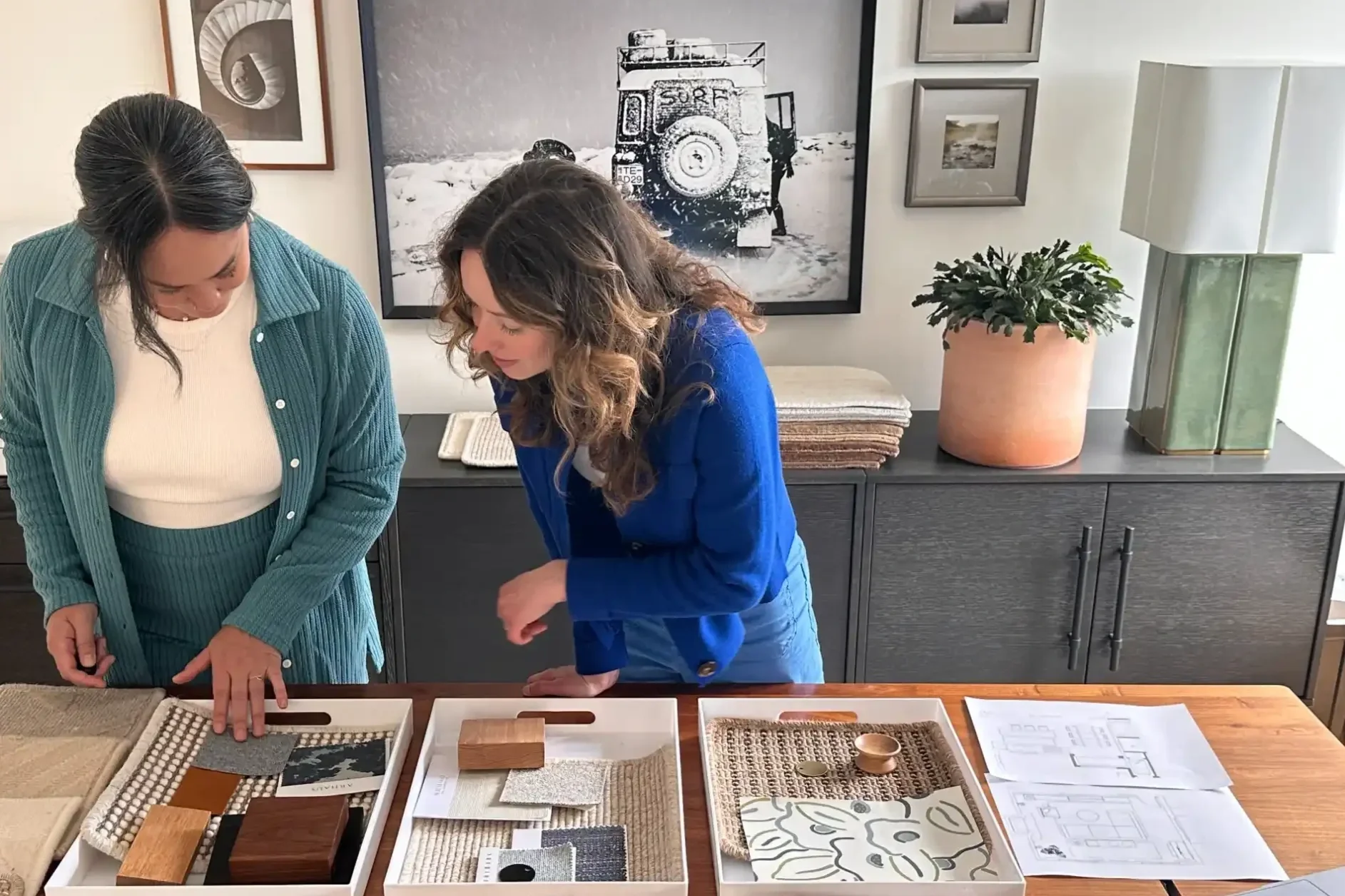
Editing material selections at the studio — narrowing finishes, fabrics, and tile down to a curated set before client review.
What Interior Designers Actually Do: Key Takeaways
The work begins long before any furniture is ordered — with a LiDAR scan, deep listening, and a budget conversation from the first call.
Trade access is more than pricing. It's a relationship network whose specification judgment and quality control protect the design at every step.
Things go wrong on every project of any real scope. The value is in how they're handled — without breaking what was deliberately designed.
An interior designer's real job is to hold the project's complexity on your behalf — so the finished home looks effortless, because the work that got it there was anything but.
If you're considering a renovation or full-service design project in San Francisco, the earlier we're part of the conversation, the better. Clients who come to us at the start get a different outcome than those who come to us mid-stream — there's more room to get it right.
Design isn't just about making things look beautiful — it's about solving complex problems beautifully. If you're ready to see how this process applies to your home, schedule an introductory call here.
— Veronica & Aggie
Frequently Asked Questions about Working with an Interior Designer
Q: What does a full-service interior designer in San Francisco actually do?
A: Our work spans spatial planning, vendor and procurement management, finish and material selection, on-site coordination during construction, and the hundreds of decisions — large and small — that shape how a finished home actually feels to live in.
Q: How is working with a boutique interior design studio different?
A: At Studio VAE, your project is led by the principals from start to finish. We keep our roster small so we can stay closely involved at every stage — decisions get made with the full benefit of everything we've learned about your home and your goals.
Q: What's the difference between an interior designer and a decorator?
A: They're often used interchangeably, but they aren't the same. A decorator focuses on the visible surface of a space — furniture, color, accessories, styling. An interior designer's role is broader and more consequential. We make decisions that become permanent the moment a wall is closed: spatial planning, material and finish specification, lighting and electrical layout, coordination with architects, engineers, and contractors, and the on-site work that protects design intent through construction. Decoration is part of what we do — not the whole of it. At Studio VAE, the two are inseparable in practice.
Q: Is there an option for working with Studio VAE if I'm not ready for a full-service interior design project?
A: Yes. Our Interior Design Consulting service offers focused, real-time professional guidance for clients who need expert input on specific decisions or challenges — without committing to a full-service project.

Meet Your Interior Designers
Studio VAE is a full-service interior design studio serving the San Francisco Bay Area, led by Principal Interior Designers Veronica Jurist and Aggie Revane.
With decades of experience in high-end hospitality, residential design and interior architecture, Veronica and Aggie create spaces rooted in sustainability, wellness and meaningful connection.